quản trị viên

/quản trị viên

About quản trị viên

This author admin has created 52 entries.

𝐒𝐭𝐞𝐞𝐥 𝐰𝐢𝐭𝐡 𝐆𝐫𝐞𝐞𝐧 – 𝐏𝐚𝐫𝐭 𝟓: 𝐒𝐭𝐞𝐞𝐥 𝐄𝐧𝐚𝐛𝐥𝐞𝐬 𝐕𝐞𝐫𝐭𝐢𝐜𝐚𝐥 𝐔𝐫𝐛𝐚𝐧 𝐆𝐫𝐨𝐰𝐭𝐡

In land-constrained urban environments, structural efficiency is key to building higher. Steel’s 𝐡𝐢𝐠𝐡 𝐬𝐭𝐫𝐞𝐧𝐠𝐭𝐡-𝐭𝐨-𝐰𝐞𝐢𝐠𝐡𝐭 𝐫𝐚𝐭𝐢𝐨 allows taller buildings with 𝐬𝐥𝐢𝐦𝐦𝐞𝐫 𝐜𝐨𝐥𝐮𝐦𝐧𝐬, increasing usable floor space while reducing overall structural weight. This lighter system also places 𝐨𝐰𝐞𝐫 𝐝𝐞𝐦𝐚𝐧𝐝𝐬 𝐨𝐧 𝐟𝐨𝐮𝐧𝐝𝐚𝐭𝐢𝐨𝐧𝐬, a major advantage in dense cities and challenging soil conditions. For multi-storey industrial and urban buildings, steel enables 𝐟𝐚𝐬𝐭𝐞𝐫 𝐜𝐨𝐧𝐬𝐭𝐫𝐮𝐜𝐭𝐢𝐨𝐧, greater design flexibility, and reduced site disruption – supporting vertical growth while using land more responsibly. At Kirby Southeast Asia, we design pre-engineered steel

𝐏𝐄𝐁 𝐊𝐧𝐨𝐰𝐥𝐞𝐝𝐠𝐞 – 𝐏𝐚𝐫𝐭 𝟐: 𝐌𝐮𝐥𝐭𝐢-𝐒𝐩𝐚𝐧 𝐅𝐫𝐚𝐦𝐞𝐬

Multi-span frames are commonly used in 𝐥𝐚𝐫𝐠𝐞 𝐢𝐧𝐝𝐮𝐬𝐭𝐫𝐢𝐚𝐥 𝐚𝐧𝐝 𝐥𝐨𝐠𝐢𝐬𝐭𝐢𝐜𝐬 𝐛𝐮𝐢𝐥𝐝𝐢𝐧𝐠𝐬 where wide, uninterrupted space is required. In PEB design, 𝐮𝐩 𝐭𝐨 𝟔 𝐬𝐩𝐚𝐧𝐬 𝐨𝐫 𝟏𝟐𝟎 𝐦𝐞𝐭𝐞𝐫𝐬 can be analyzed 𝐰𝐢𝐭𝐡𝐨𝐮𝐭 𝐥𝐚𝐭𝐞𝐫𝐚𝐥 𝐞𝐱𝐩𝐚𝐧𝐬𝐢𝐨𝐧 𝐣𝐨𝐢𝐧𝐭𝐬, allowing efficient structural behavior and flexible layouts. For wider buildings, 𝐝𝐨𝐮𝐛𝐥𝐞-𝐜𝐨𝐥𝐮𝐦𝐧 𝐞𝐱𝐩𝐚𝐧𝐬𝐢𝐨𝐧 𝐣𝐨𝐢𝐧𝐭𝐬 are introduced to manage structural and thermal movement. Exterior columns are designed as 𝐛𝐮𝐢𝐥𝐭-𝐮𝐩 𝐬𝐞𝐜𝐭𝐢𝐨𝐧𝐬, tapered or straight, with 𝐩𝐢𝐧𝐧𝐞𝐝 𝐨𝐫 𝐟𝐢𝐱𝐞𝐝 𝐛𝐚𝐬𝐞𝐬 depending on eave height. These columns form rigid connections with continuous built-up

PEB Knowledge – Part 1: Tapered Steel for Smarter Spans Building Stronger & More Efficiently

At Kirby Southeast Asia, one of the key advantages of Pre-Engineered Buildings lies in the use of built-up tapered steel sections – a smarter, more efficient alternative to conventional hot-rolled sections. In PEB design, built-up members are formed by welding steel plates into an I-section whose depth can be varied along the span. This allows engineers to place material exactly where strength is needed, resulting in a lighter yet stronger structure. Why Built-Up Sections Matter  Optimized material usage – thicker where the bending

Steel with Green – Post 4: Energy Efficiency with Steel + Insulated Panels

Improving energy efficiency in industrial buildings starts from the envelope – how effectively a structure can control heat transfer between the interior and exterior environments. One of the most reliable solutions is to combine pre-engineered steel structures with insulated panels from qualified suppliers. Understanding the concept Insulated sandwich panels are composed of two steel sheets bonded to an insulating core, typically polyurethane (PU), polyisocyanurate (PIR), or rock wool. This layered configuration minimizes heat flow through roofs and walls, allowing buildings to maintain a stable internal temperature with less

Steel with Green – Post 3: Less Water, Less Dust

Building smarter also means building cleaner. With steel, we use less water, create less dust, and leave a lighter footprint on the environment. Unlike traditional concrete construction, where water use and dust are part of the process, pre-engineered steel buildings are fabricated off-site and assembled with precision. The result? Cleaner sites  Healthier conditions for workers and communities  A safer, more sustainable way to grow industries At Kirby Southeast Asia, we believe sustainability isn’t just a feature of the final building, it’s present in every stage

Steel with Green – Post 2: Zero Waste Construction

Waste is one of the biggest hidden costs in construction – not just in budget, but in environmental impact. That’s why pre-engineered steel plays such a vital role in sustainable building. At Kirby SEA, every component is precisely fabricated off-site, delivered ready for assembly, and installed with minimal cutting or modification on-site. This process drastically reduces: – Material waste – On-site debris – Rework and errors – Disposal needs Our warehouse project in Thailand is a clear example. Using Kirby’s pre-engineered system, we optimized material usage and minimized waste

Steel with Green – Post 1: Built to Be Rebuilt

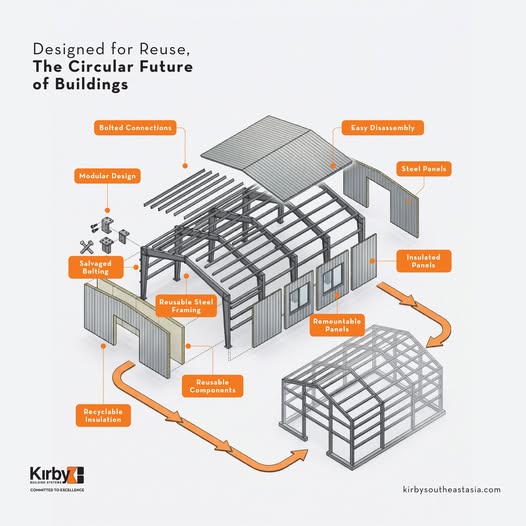
In sustainable construction, longevity isn’t the only goal – reusability is the future. That’s why steel stands apart. Unlike concrete or wood, steel is 100% recyclable, infinitely, with no loss in strength. Every beam, column, and truss can be melted down and reborn as part of another building, bridge, or frame. At Kirby SEA, we design and fabricate with this lifecycle in mind – because what we build today should not become tomorrow’s waste. Take our new warehouse project in Negros Occidental, Philippines –

When Steel Meets Fire – Part 1: The Truth About Steel and Fire

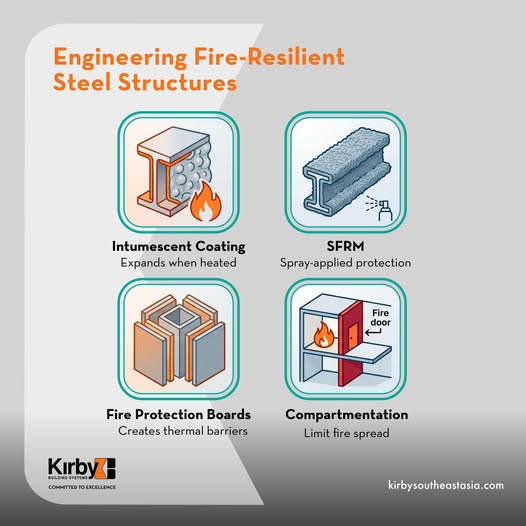
Steel is non-combustible and does not act as a fuel in a fire. That said, like all structural materials, steel’s load-carrying capacity changes when exposed to elevated temperatures. Engineers manage this through design: selecting appropriate sections, limiting loads, and applying passive fire protection so the structure remains stable for the required evacuation and firefighting periods. What makes steel a preferred structural material in fire engineering is its predictable behaviour. Because its response to temperature can be modelled and tested, designers can specify

Steel for the Sky – Post 2: Strength Without Weight – The Steel Advantage in High-Rise Construction

Why steel works for high-rise buildings? Because it’s strong without the weight. That means: • Less load on foundations • Slimmer structures = more usable space • More freedom to go higher, safely It’s this smart balance that makes steel the go-to for towers, commercial hubs, and multi-level facilities. As cities grow upward, steel helps us build smarter. Contact us today: sales@kirby.vn