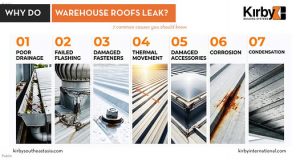


Why Do Warehouse Roofs Leak? 7 Common Causes and How to Prevent Them
Warehouse roof leaks can cause more than just a wet floor. Water intrusion can damage stored goods, equipment, insulation, electrical systems, and other building components. Over time, recurring roof leakage may also affect warehouse operations, maintenance costs, and the overall performance of the building.
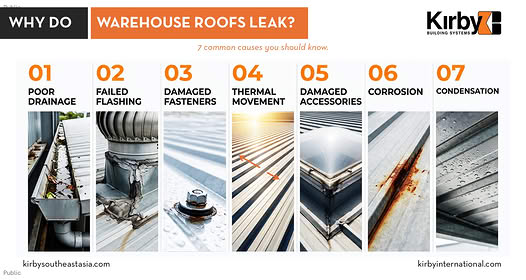
So, why do warehouse roofs leak?
In most cases, warehouse roof leaks are not caused by a single issue. They can result from roof design, installation, drainage, materials, weather exposure, or a lack of regular maintenance. Understanding these common causes can help building owners and facility managers identify potential problems early and reduce the risk of costly repairs.
1. Poor Roof Design and Planning
One of the first causes of warehouse roof leaks can be poor roof design or insufficient planning.
A warehouse roof must be designed to handle local weather conditions, rainfall, roof slopes, drainage requirements, and the intended use of the building. If these factors are not properly considered during the design stage, water may accumulate on the roof instead of flowing efficiently toward the drainage system.
Proper roof design should consider:
- Roof slope and water flow
- Rainfall intensity and local climate
- Gutter and downpipe capacity
- Roof penetration locations
- Flashing and connection details
- Maintenance and inspection access
A well-planned roofing system helps reduce the risk of water accumulation and long-term leakage.
2. Insufficient Roof Drainage
Effective drainage is essential for preventing warehouse roof leaks.
When gutters, downpipes, or drainage outlets are undersized, blocked, or incorrectly positioned, rainwater can accumulate on the roof. During heavy rainfall, this can place additional stress on the roofing system and increase the chance of water entering through joints, laps, or penetrations.
Regular inspection and cleaning of gutters and drainage points can help maintain proper water flow.
For large warehouses, drainage capacity should also be considered during the initial building design rather than treated as an afterthought.
3. Damaged or Improperly Installed Roofing Sheets
Roofing sheets can become damaged during transportation, installation, maintenance work, or exposure to severe weather.
Common issues include:
- Scratches or punctures
- Damaged coating
- Incorrectly installed fasteners
- Loose or over-tightened screws
- Improper sheet overlaps
- Damaged roof panels
Even a small defect can become a source of warehouse roof leakage when exposed to repeated rainfall.
Professional installation and careful handling of roofing materials are therefore important for maintaining the long-term performance of a warehouse roof.
4. Failed Flashing and Roof Details
Flashing is used around areas where different parts of the building meet, including roof edges, walls, openings, and penetrations.
These areas require careful detailing because they can become vulnerable points for water intrusion.
Poorly installed, damaged, or deteriorated flashing may allow water to enter the building, particularly during heavy rain or strong winds.
Regular inspection of flashing, roof edges, and connection points can help identify potential leakage before it becomes a larger problem.
5. Roof Penetrations and Equipment
Warehouse roofs often contain penetrations for ventilation systems, pipes, skylights, air-conditioning equipment, exhaust systems, or other building services.
Each penetration creates another potential entry point for water.
If the surrounding sealant, flashing, or waterproofing detail deteriorates, water can enter through the opening and cause warehouse roof leaks.
Whenever new equipment is installed on a roof, the penetration should be properly detailed and sealed. Existing penetrations should also be inspected as part of routine roof maintenance.
6. Weather and Environmental Exposure
Warehouse roofing systems are continuously exposed to the environment.
Strong sunlight, heavy rainfall, wind, temperature changes, humidity, and airborne pollutants can gradually affect roofing materials and connections.
Over time, these conditions may contribute to:
- Material deterioration
- Corrosion
- Sealant failure
- Loose fasteners
- Coating damage
- Blocked drainage systems
Buildings in areas with heavy rainfall or severe weather conditions may require more frequent roof inspections to maintain performance.
7. Lack of Regular Roof Maintenance
Even a well-designed and properly installed warehouse roof requires regular maintenance.
Without inspection and preventive maintenance, small issues can develop into significant warehouse roof leaks.
A practical maintenance program should include checking:
- Roofing sheets and panel joints
- Fasteners and connections
- Gutters and downpipes
- Flashing and roof edges
- Sealants around penetrations
- Signs of corrosion
- Standing water
- Damaged or deteriorated materials
Identifying a small defect early is usually easier and less costly than repairing extensive water damage later.
How to Prevent Warehouse Roof Leaks
Preventing warehouse roof leaks starts before construction and continues throughout the building’s service life.
A reliable approach includes:
Start with Proper Design
Roof slope, drainage capacity, materials, connections, and weather conditions should all be considered during the engineering and design stage.
Use Quality Materials
Selecting suitable roofing materials and components helps improve durability and resistance to environmental exposure.
Follow Proper Installation Practices
Roofing sheets, fasteners, flashing, and drainage components must be installed according to the appropriate technical requirements and project specifications.
Inspect Critical Areas Regularly
Gutters, penetrations, joints, flashing, and roof edges should receive particular attention during inspections.
Address Problems Early
Small signs of water intrusion should not be ignored. Early repairs can help prevent more extensive damage to the building and its contents.
Building Better-Performing Warehouses
A warehouse roof is an important part of the building envelope. Its performance depends on the interaction between design, materials, installation, drainage, and maintenance.
Understanding the common causes of warehouse roof leaks allows building owners and project teams to take a more proactive approach to roof performance.
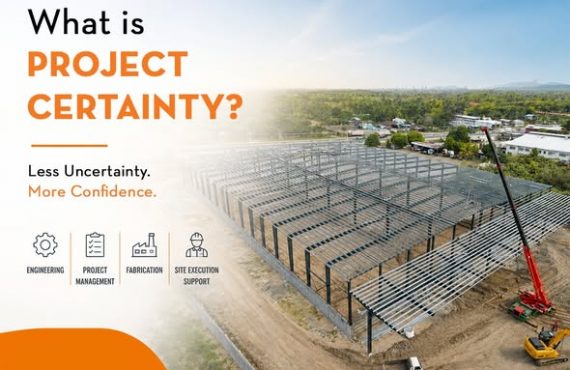
For PEB warehouses, certainty starts with getting the fundamentals right—from engineering and material selection to fabrication, installation, and long-term building performance.
At Kirby Southeast Asia, our approach to steel building solutions focuses on delivering reliable systems designed around project requirements, quality, and long-term performance.
Project Certainty starts with building the right way from the beginning.