

Earthquake-Resistant Steel Structures: Why Steel Is Ready
Earthquakes create powerful forces that challenge the stability of buildings. In seismic zones, choosing the right structural system is essential to protect people, property, and business operations.
Earthquake-resistant steel structures use strength, ductility, and engineered connections to respond to seismic forces. Unlike brittle systems, properly designed steel frames can accommodate controlled deformation during ground movement.
Steel does not simply fight an earthquake. It is engineered to respond to movement.
Table of Contents
- 1. Why Ductility Matters
- 2. How Steel Frames Respond
- 3. Four Key Benefits
- 4. The Importance of Steel Connections
- 5. Engineering Standards
- 6. Designing for Resilience
1. Why Earthquake-Resistant Steel Structures Need Ductility
Ductility describes a material or structural system’s ability to deform while maintaining its capacity to carry loads.
During an earthquake, ground movement generates forces throughout a building. Properly designed steel frames can deform in a controlled manner and dissipate seismic energy through designated structural components.
This behavior helps reduce the risk of sudden, brittle failure. However, ductility does not guarantee that a building will remain undamaged.
Actual performance depends on structural design, connection details, material properties, construction quality, and earthquake intensity.
2. How Steel Frames Respond to Earthquake Forces
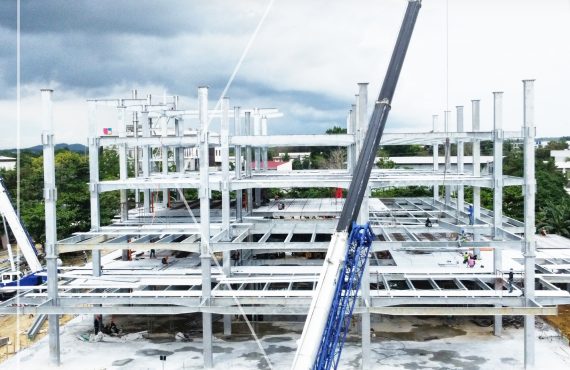
Steel buildings rely on an integrated structural system. Beams, columns, braces, and connections work together to resist lateral forces caused by ground movement.
Engineers establish appropriate load paths to transfer seismic forces safely through the structure and toward its foundation.
Depending on project requirements, suitable solutions may include moment-resisting frames, braced frames, or other lateral-force-resisting systems.
Each system requires specific engineering and detailing. Building geometry, occupancy, soil conditions, and local seismic standards all influence the final design.
3. Four Benefits of Properly Engineered Seismic Steel Structures
1. Controlled Structural Deformation
Steel’s ductility allows appropriately designed components to undergo inelastic deformation during strong ground movement. This helps dissipate seismic energy while maintaining the intended structural response.
2. Effective Seismic Load Transfer
Beams, columns, braces, and connections create coordinated load paths. Proper detailing helps distribute earthquake forces through the building toward the foundation.
3. Improved Structural Performance
Seismic engineering evaluates more than member strength. Stiffness, stability, structural drift, and connection behavior must also be considered to achieve the intended performance objectives.
4. More Efficient Damage Assessment
After an earthquake, buildings require professional inspection before occupants can safely return. Accessible steel components and clearly defined structural systems can support damage assessment and repair planning.
Actual recovery time depends on the extent of damage and engineering evaluation.
4. Why Steel Connections Matter in Earthquake-Resistant Design
Connections are essential to the performance of a steel frame. They transfer forces between beams, columns, braces, and other structural members.
Seismic design must address connection strength, ductility, stability, and detailing. Bracing configurations also influence how lateral forces move through the building.
The American Institute of Steel Construction’s seismic resources provide technical guidance on seismic provisions and structural steel connection requirements.
5. The Role of Engineering Standards in Seismic Steel Buildings
Earthquake-resistant steel structures must follow applicable building codes and seismic design requirements for their project location.
Engineers evaluate seismic loads, structural strength, stiffness, inter-story drift, and stability when selecting an appropriate structural system.
Material specifications and fabrication quality are equally important. Welding, bolting, and connection details require suitable quality control to meet project requirements.
At Kirby Southeast Asia, engineering coordination supports the development of pre-engineered steel building solutions. Every project considers its intended use, location, design requirements, and applicable technical standards.
Discover our pre-engineered steel building solutions and engineering capabilities.
6. Designing for Resilience: Beyond Strength
A resilient building depends on more than material strength. Its performance comes from the interaction of the complete structural system.
In earthquake-prone locations, engineers must consider structural layout, lateral stability, connection behavior, foundation conditions, and construction quality from the earliest design stages.
Steel offers valuable design flexibility, but its benefits depend on proper engineering and execution.
Conclusion: Steel Is Ready When Engineering Leads the Way
Earthquakes cannot be prevented, but buildings can be engineered to respond to seismic forces. Ductility, structural stability, effective load paths, and properly detailed connections all contribute to steel building performance.
At Kirby Southeast Asia, every beam, brace, and connection is part of a larger engineering system. By considering project-specific requirements and applicable standards, we aim to deliver steel building solutions focused on performance, reliability, and long-term value.
Because in a seismic zone, the safest solution is not simply choosing the strongest material. It is designing a structure smart enough to bend.
Steel to the Sky – Part 3: Earthquake? Steel Is Ready.