PEBKnowledge

/标签:PEBKnowledge

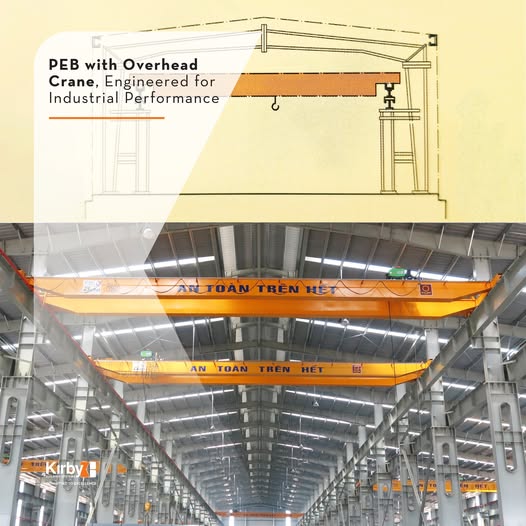
𝐏𝐄𝐁 𝐊𝐧𝐨𝐰𝐥𝐞𝐝𝐠𝐞 – 𝐏𝐚𝐫𝐭 𝟑: 𝐏𝐄𝐁 𝐰𝐢𝐭𝐡 𝐎𝐯𝐞𝐫𝐡𝐞𝐚𝐝 𝐂𝐫𝐚𝐧𝐞 – 𝐄𝐧𝐠𝐢𝐧𝐞𝐞𝐫𝐞𝐝 𝐟𝐨𝐫 𝐈𝐧𝐝𝐮𝐬𝐭𝐫𝐢𝐚𝐥 𝐏𝐞𝐫𝐟𝐨𝐫𝐦𝐚𝐧𝐜𝐞

Rigid frame Pre-Engineered Buildings (PEB) can be designed to support 𝐄𝐎𝐓 𝐜𝐫𝐚𝐧𝐞 𝐬𝐲𝐬𝐭𝐞𝐦𝐬 𝐮𝐩 𝐭𝐨 𝟏𝟓 𝐌𝐓 (span up to 21 m), in compliance with 𝐀𝐈𝐒𝐂 𝐚𝐧𝐝 𝐌𝐁𝐌𝐀 𝐬𝐭𝐚𝐧𝐝𝐚𝐫𝐝𝐬. For crane-supported buildings, structural performance goes beyond static loads – dynamic effects must be carefully evaluated. Typical design considerations include: Bracket-mounted crane runway systems Independent support columns for higher crane capacities Impact allowance of 10–25% of the maximum wheel load 20% lateral force from trolley movement Verification of critical load combinations Crane buildings are dynamic systems. Precise load calculation
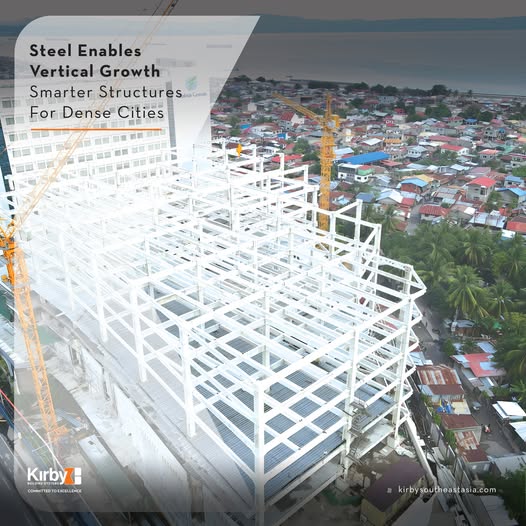
𝐒𝐭𝐞𝐞𝐥 𝐰𝐢𝐭𝐡 𝐆𝐫𝐞𝐞𝐧 – 𝐏𝐚𝐫𝐭 𝟓: 𝐒𝐭𝐞𝐞𝐥 𝐄𝐧𝐚𝐛𝐥𝐞𝐬 𝐕𝐞𝐫𝐭𝐢𝐜𝐚𝐥 𝐔𝐫𝐛𝐚𝐧 𝐆𝐫𝐨𝐰𝐭𝐡

In land-constrained urban environments, structural efficiency is key to building higher. Steel’s 𝐡𝐢𝐠𝐡 𝐬𝐭𝐫𝐞𝐧𝐠𝐭𝐡-𝐭𝐨-𝐰𝐞𝐢𝐠𝐡𝐭 𝐫𝐚𝐭𝐢𝐨 allows taller buildings with 𝐬𝐥𝐢𝐦𝐦𝐞𝐫 𝐜𝐨𝐥𝐮𝐦𝐧𝐬, increasing usable floor space while reducing overall structural weight. This lighter system also places 𝐨𝐰𝐞𝐫 𝐝𝐞𝐦𝐚𝐧𝐝𝐬 𝐨𝐧 𝐟𝐨𝐮𝐧𝐝𝐚𝐭𝐢𝐨𝐧𝐬, a major advantage in dense cities and challenging soil conditions. For multi-storey industrial and urban buildings, steel enables 𝐟𝐚𝐬𝐭𝐞𝐫 𝐜𝐨𝐧𝐬𝐭𝐫𝐮𝐜𝐭𝐢𝐨𝐧, greater design flexibility, and reduced site disruption – supporting vertical growth while using land more responsibly. At Kirby Southeast Asia, we design pre-engineered steel

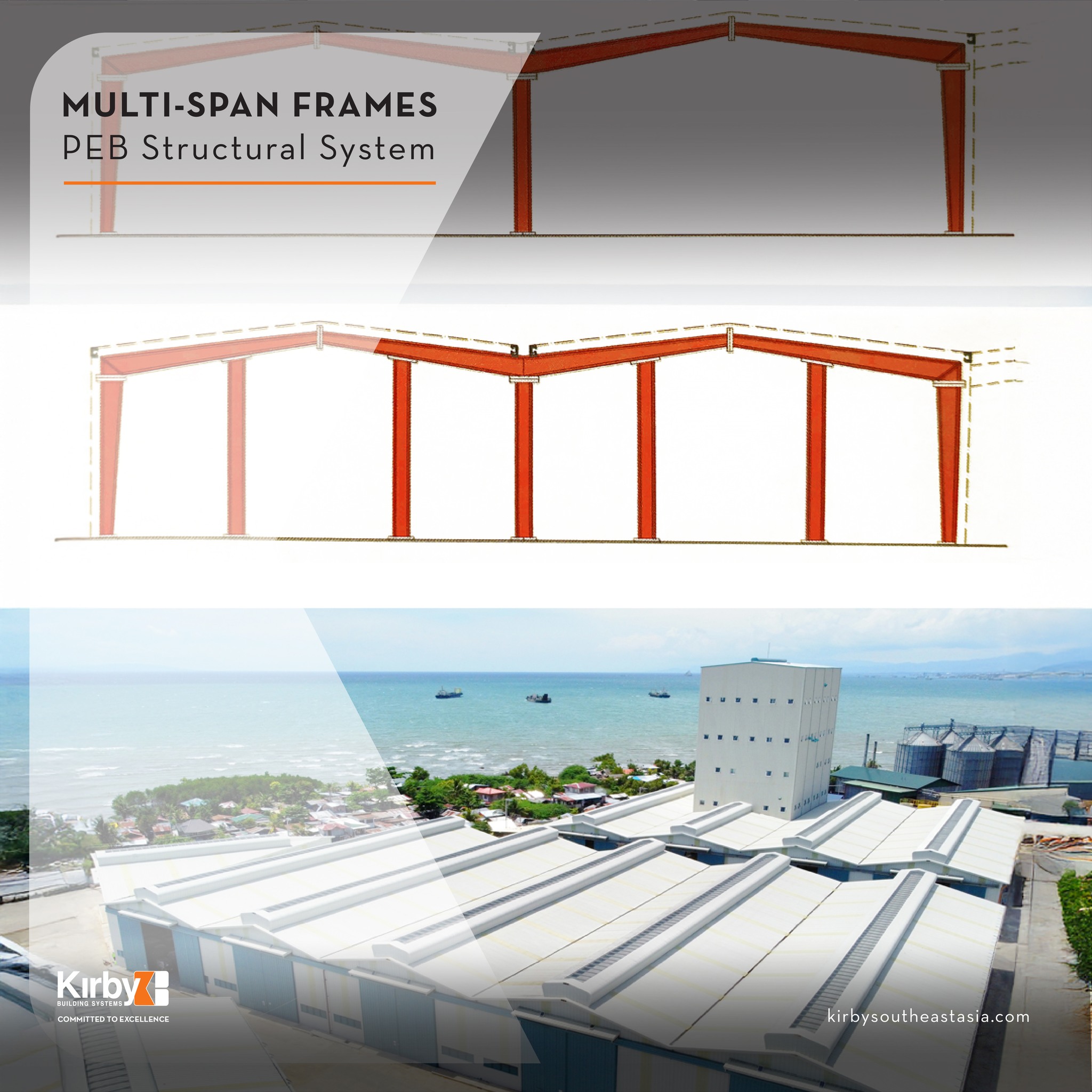
𝐏𝐄𝐁 𝐊𝐧𝐨𝐰𝐥𝐞𝐝𝐠𝐞 – 𝐏𝐚𝐫𝐭 𝟐: 𝐌𝐮𝐥𝐭𝐢-𝐒𝐩𝐚𝐧 𝐅𝐫𝐚𝐦𝐞𝐬

Multi-span frames are commonly used in 𝐥𝐚𝐫𝐠𝐞 𝐢𝐧𝐝𝐮𝐬𝐭𝐫𝐢𝐚𝐥 𝐚𝐧𝐝 𝐥𝐨𝐠𝐢𝐬𝐭𝐢𝐜𝐬 𝐛𝐮𝐢𝐥𝐝𝐢𝐧𝐠𝐬 where wide, uninterrupted space is required. In PEB design, 𝐮𝐩 𝐭𝐨 𝟔 𝐬𝐩𝐚𝐧𝐬 𝐨𝐫 𝟏𝟐𝟎 𝐦𝐞𝐭𝐞𝐫𝐬 can be analyzed 𝐰𝐢𝐭𝐡𝐨𝐮𝐭 𝐥𝐚𝐭𝐞𝐫𝐚𝐥 𝐞𝐱𝐩𝐚𝐧𝐬𝐢𝐨𝐧 𝐣𝐨𝐢𝐧𝐭𝐬, allowing efficient structural behavior and flexible layouts. For wider buildings, 𝐝𝐨𝐮𝐛𝐥𝐞-𝐜𝐨𝐥𝐮𝐦𝐧 𝐞𝐱𝐩𝐚𝐧𝐬𝐢𝐨𝐧 𝐣𝐨𝐢𝐧𝐭𝐬 are introduced to manage structural and thermal movement. Exterior columns are designed as 𝐛𝐮𝐢𝐥𝐭-𝐮𝐩 𝐬𝐞𝐜𝐭𝐢𝐨𝐧𝐬, tapered or straight, with 𝐩𝐢𝐧𝐧𝐞𝐝 𝐨𝐫 𝐟𝐢𝐱𝐞𝐝 𝐛𝐚𝐬𝐞𝐬 depending on eave height. These columns form rigid connections with continuous built-up

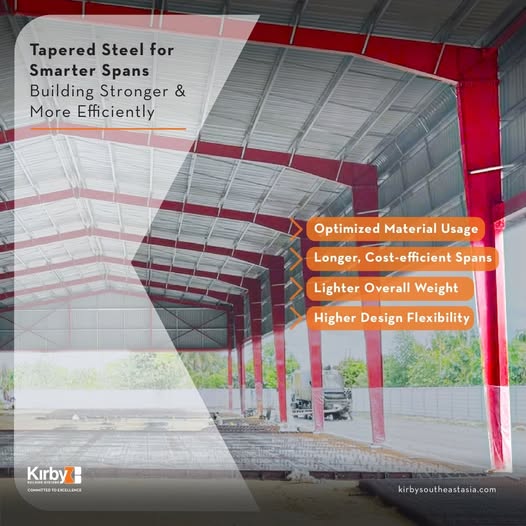
PEB Knowledge – Part 1: Tapered Steel for Smarter Spans Building Stronger & More Efficiently

At Kirby Southeast Asia, one of the key advantages of Pre-Engineered Buildings lies in the use of built-up tapered steel sections – a smarter, more efficient alternative to conventional hot-rolled sections. In PEB design, built-up members are formed by welding steel plates into an I-section whose depth can be varied along the span. This allows engineers to place material exactly where strength is needed, resulting in a lighter yet stronger structure. Why Built-Up Sections Matter  Optimized material usage – thicker where the bending