

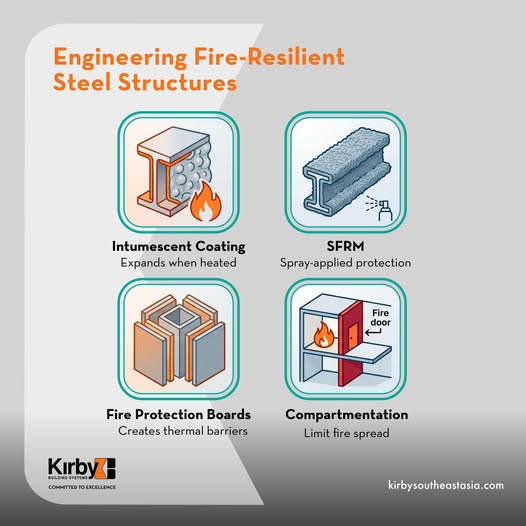
Steel Fire Protection: 4 Methods for Structural Safety
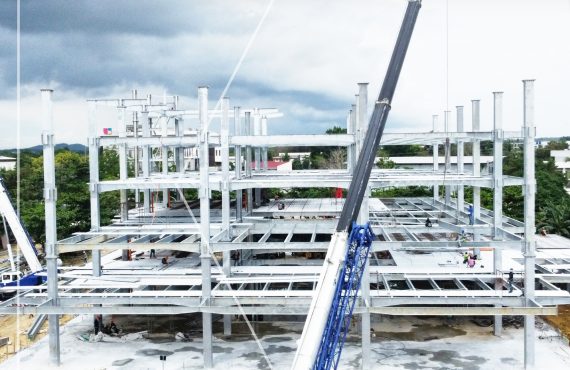
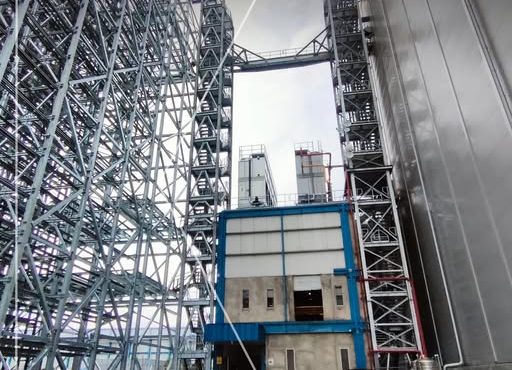
Steel structures are widely used in industrial, commercial, and large-scale buildings because of their strength, flexibility, and dependable structural performance. However, when exposed to extreme heat, structural steel can lose strength and stiffness.
This is why steel fire protection is an important consideration when designing and constructing buildings where specific fire-resistance requirements apply.
The objective of structural fire protection is straightforward: slow the transfer of heat to structural steel and help maintain its load-bearing capacity for the required period of time. This can provide additional time for safe evacuation, emergency response, and firefighting operations.
The appropriate solution depends on the building’s function, required fire-resistance rating, structural design, and applicable local regulations.
Why Steel Fire Protection Matters
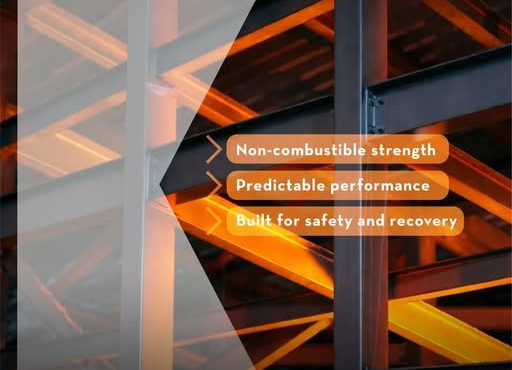
Steel does not burn like combustible building materials, but its mechanical properties can change significantly when exposed to high temperatures.
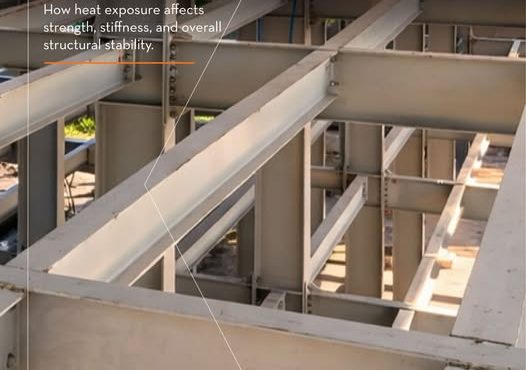
As temperatures increase, the strength and stiffness of structural steel can decrease. Without appropriate design and protection measures, prolonged exposure to fire may affect the performance of structural members.
For this reason, structural steel fire protection should be considered as part of the overall building design rather than treated as an afterthought.
A suitable fire protection strategy can help protect structural members and support the required fire-resistance performance of the building.
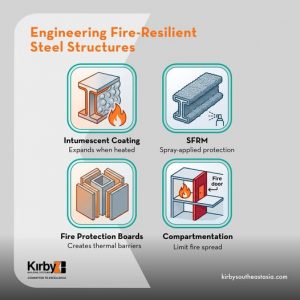
1. Intumescent Coatings
Intumescent coatings are a commonly used form of steel fire protection.
When exposed to high temperatures, these coatings react and expand to form a thicker insulating char layer around the protected steel member.
The expanded layer helps slow the rate at which heat reaches the steel, providing thermal protection for the required design period.
Intumescent coatings can be particularly useful when maintaining the visual appearance of exposed structural steel is important. They can also be applied in controlled environments and are available in systems designed for different fire-resistance requirements.
The coating system must be properly specified, applied, and inspected according to the manufacturer’s requirements and the applicable fire-resistance design.
2. Spray-Applied Fire-Resistive Materials (SFRM)
Spray-Applied Fire-Resistive Materials (SFRM) provide another practical approach to protecting structural steel from elevated temperatures.
SFRM is applied directly to structural members to create an insulating layer that helps slow heat transfer during a fire.
This type of steel fire protection can be suitable for a range of industrial and commercial applications, particularly where exposed structural members require passive fire protection.
The performance of an SFRM system depends on factors such as the specified material, application thickness, substrate preparation, environmental conditions, and required fire-resistance rating.
Proper installation and quality control are therefore important to achieving the intended performance.
3. Fire Protection Boards
Fire protection boards provide a rigid protective layer around structural steel members.
These boards act as a thermal barrier, helping limit the rate at which heat reaches the steel during a fire.
Compared with some spray-applied systems, board systems can provide a clean and defined finish, making them suitable for applications where appearance and detailing are important considerations.
The board type, thickness, fixing method, joints, and installation details should all follow the requirements of the tested or assessed fire protection system.
4. Compartmentation and Insulation
Not every fire protection strategy relies on directly coating or enclosing a steel member.
Compartmentation is an architectural and building design strategy that helps limit the spread of fire and smoke between defined areas of a building.
Fire-rated walls, floors, doors, and other separation elements can help contain fire within a designated compartment for the required period.
Insulation and other passive fire protection measures can also be incorporated into the building design to manage heat transfer and protect critical structural components.
When combined with appropriate structural design, compartmentation can form an important part of an overall fire safety strategy.
Choosing the Right Steel Fire Protection Method
There is no single fire protection method that is suitable for every building.
The appropriate solution depends on several factors, including:
- Building function and occupancy
- Required fire-resistance rating
- Structural member size and configuration
- Building design and architectural requirements
- Environmental conditions
- Installation requirements
- Maintenance considerations
- Applicable local building and fire safety regulations
For this reason, steel fire protection should be selected as part of a coordinated design process involving structural engineers, fire safety professionals, architects, contractors, and other relevant project stakeholders.
Integrating Fire Protection into Steel Building Design
Fire protection is most effective when considered during the early stages of project development.
Structural design, architectural requirements, fire safety systems, insulation, and passive fire protection should work together rather than being addressed independently.
For pre-engineered buildings and other steel structures, early coordination can help ensure that structural members are compatible with the specified fire protection system and that installation requirements are considered during fabrication and construction planning.
At Kirby Southeast Asia, our engineering approach considers the requirements of each project and supports the integration of appropriate fire protection solutions with structural steel systems.
This helps project teams address safety, compliance, constructability, and long-term building performance as part of the overall design process.
Building Safety Starts with the Right Protection
Structural steel provides the strength and flexibility required for many modern buildings. However, its performance during a fire depends on appropriate design and protection measures.
From intumescent coatings and SFRM to fire protection boards and compartmentation, different approaches can be used depending on project requirements and applicable regulations.
The right strategy should always be determined through project-specific engineering, fire safety design, and compliance requirements.
At Kirby Southeast Asia, we engineer steel building systems designed to integrate with appropriate fire protection solutions and support the safety and performance requirements of industrial and commercial projects.
Because structural performance is not only about how a building stands — it is also about how it is designed to perform when conditions become critical.
Engineered for Safety and Performance
From engineering design to fabrication and site execution, Kirby Southeast Asia provides pre-engineered building and structural steel solutions designed around project requirements.
For your next project, contact the Kirby Southeast Asia team to discuss your building requirements and fire protection considerations.