

Steel Fabrication Process: 5 Steps to Project Certainty
A reliable steel fabrication process begins long before steel reaches the fabrication floor. Engineering, planning, coordination, and a clear understanding of project requirements all contribute to successful project delivery.
Before the first component is fabricated, important decisions have already been made. Design requirements are reviewed, technical specifications are coordinated, materials are planned, and production activities are prepared.
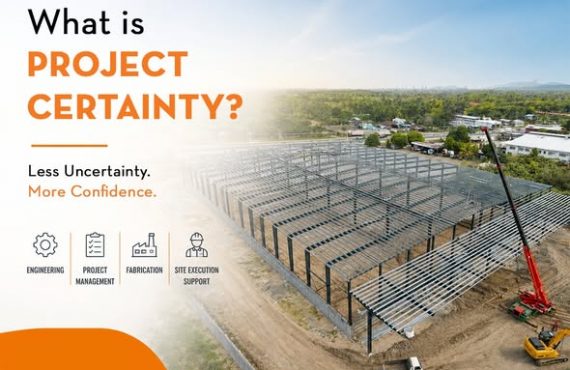
At Kirby Southeast Asia, we believe this preparation is an essential part of Project Certainty. Here are five important stages that help create confidence throughout a steel construction project.
Table of Contents
- 1. Engineering Establishes the Foundation
- 2. Planning Connects Production Activities
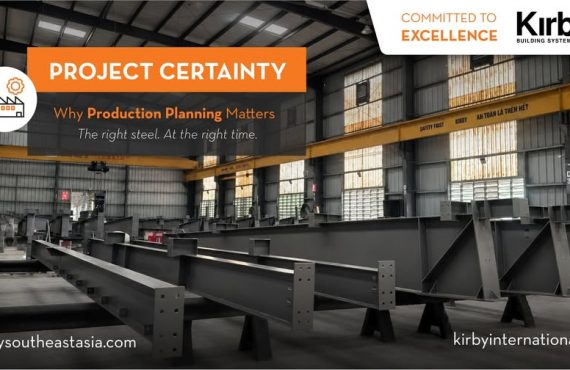
- 3. Fabrication Turns Designs into Components
- 4. Quality Control Maintains Consistency
- 5. Coordination Connects Factory and Site
- Building Project Certainty with Kirby
1. Engineering in the Steel Fabrication Process
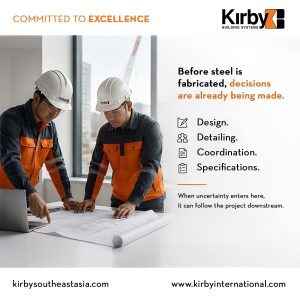
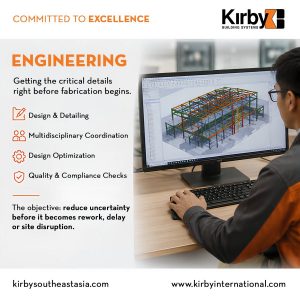
Every successful steel construction project starts with a clear engineering foundation. Engineering teams translate project requirements into detailed designs and fabrication information, ensuring that dimensions, connections, materials, and structural specifications are properly coordinated.
This stage establishes the technical direction for the project. Accurate engineering information helps production teams understand requirements, identify potential issues early, and reduce the risk of unnecessary adjustments during manufacturing.
For customers, effective engineering provides greater visibility and confidence before production begins. Explore Kirby’s pre-engineered steel building solutions to learn more about our engineering and building capabilities.
2. Planning Connects Production Activities
Good engineering needs to be supported by effective production planning. Once project requirements are established, materials, production sequences, resources, and schedules must be coordinated to keep activities aligned.
This is particularly important for large-scale steel projects, where multiple components need to be manufactured, inspected, packaged, and delivered according to specific project requirements.
Well-structured planning helps teams understand what needs to happen, when activities should take place, and how each stage connects to the next. Read more about steel production planning and project certainty.
3. Fabrication Turns Designs into Components
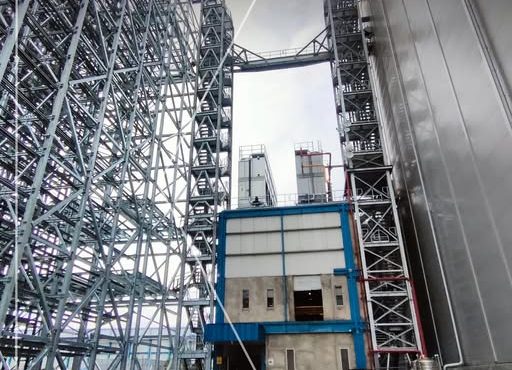
Once engineering and planning are coordinated, fabrication transforms approved designs into physical steel components. Activities may include material preparation, cutting, drilling, welding, assembly, and finishing, depending on the project specifications.
Each operation needs to follow the relevant technical requirements to support dimensional accuracy, consistent workmanship, and efficient production. Coordination between production teams also helps maintain a steady workflow and minimize avoidable disruptions.
For more information about Kirby’s manufacturing capabilities, explore our structural steel solutions.

4. Quality Control Maintains Consistency
Quality should not be treated as a final checkpoint. It needs to be considered throughout the manufacturing process, from material preparation to final inspection.
Inspection procedures help verify that materials and fabricated components meet the required specifications. Identifying potential issues during production allows teams to address them before components move to subsequent stages.
This process-oriented approach supports consistent quality, reduces unnecessary rework, and contributes to more reliable project execution. The American Institute of Steel Construction (AISC) provides industry standards and resources covering structural steel fabrication and quality practices.
5. Coordination Connects Factory and Site
Fabrication completion is an important milestone, but it does not mark the end of the project journey. Finished steel components must be inspected, prepared for transportation, and delivered in line with construction requirements.
Logistics planning needs to consider packaging, loading, transportation, delivery sequences, and site readiness. Coordinating these activities with construction schedules helps ensure that materials are available when required.
By connecting manufacturing and delivery activities, project teams can maintain better visibility and support a smoother transition from the factory to the construction site.
Building Project Certainty with Kirby
At Kirby Southeast Asia, we understand that customers are investing in more than fabricated steel. They need building solutions that support their operations, project schedules, and long-term business objectives.
That is why our approach connects engineering, production planning, fabrication, quality management, logistics, and project coordination. Each stage plays an important role in creating confidence throughout the project lifecycle.
A successful steel fabrication process is not defined by manufacturing alone. It depends on the decisions made before production, the discipline maintained during fabrication, and the coordination that continues through delivery and construction.
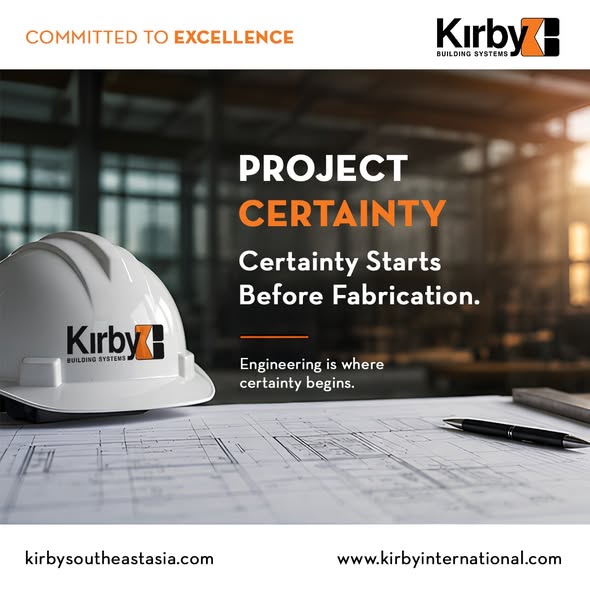
Certainty starts before fabrication. It is built into every stage through preparation, quality, and collaboration.
Kirby Southeast Asia — Project Certainty, built into every stage.