

Industrial Steel Staircases: Engineered Access Solutions for Industrial Buildings
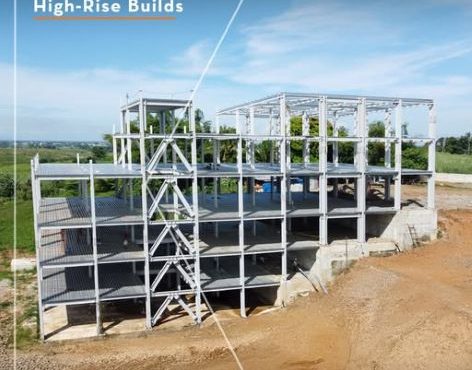
Industrial steel staircases play an essential role in complex industrial buildings, where accessibility is not an afterthought but a vital part of safety, operations, and long-term performance. In high-rise warehouses and automated industrial facilities, reliable vertical access helps workers reach elevated platforms, equipment areas, and operational levels safely and efficiently.
As industrial buildings become more advanced, staircase systems must do more than connect different floors. They must meet structural requirements, accommodate operational needs, and integrate seamlessly with the overall building design.
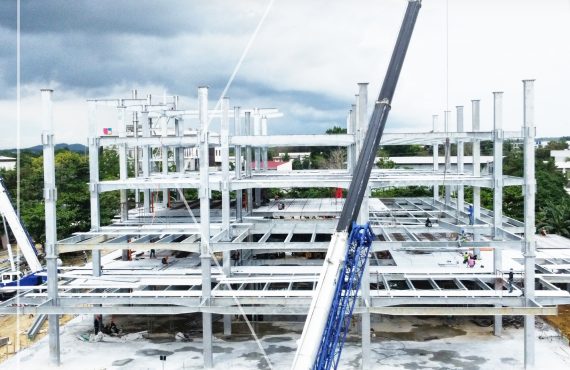
At Kirby Southeast Asia (Kirby SEA), we design and fabricate engineered staircase systems tailored for high-rise warehouses and automation facilities. Our solutions combine structural steel engineering, fabrication precision, and practical functionality to support demanding industrial environments.
Table of Contents
- Why Are Industrial Steel Staircases Important?
- 1. Structural Design and Load-Bearing Performance
- 2. Stability and Resistance to Lateral Forces
- 3. Safety and Reliable Vertical Access
- 4. Customized Engineering for Industrial Facilities
- 5. Precision Fabrication and Installation
- Kirby SEA: Engineered Steel Staircase Solutions
- Engineered in Steel. Delivered with Certainty.
- Frequently Asked Questions

Why Are Industrial Steel Staircases Important?
Industrial buildings often contain multiple working levels, elevated equipment platforms, maintenance areas, and specialized operational zones. Providing safe and convenient access between these spaces is essential for daily operations.
Unlike conventional building staircases, industrial steel staircases must be designed around specific operational and structural requirements. Their configuration needs to consider building height, available space, expected loads, access frequency, and connections to surrounding structural members.
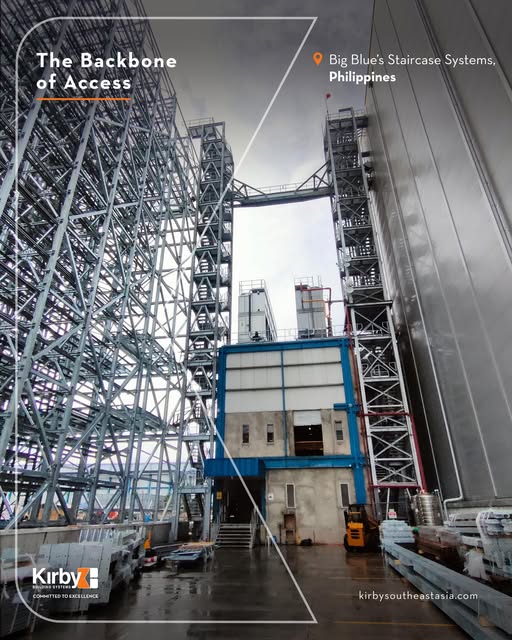
In automated warehouses, for example, staircase systems can provide access to elevated platforms and equipment areas where workers need to perform inspections, maintenance, and operational tasks.
A properly engineered staircase therefore contributes to both workplace safety and the overall functionality of an industrial facility.
1. Structural Design and Load-Bearing Performance
Structural performance is one of the most important considerations in industrial staircase engineering. Staircase members, connections, platforms, and supporting elements must be designed to withstand the loads expected during operation.
Depending on the application, engineering considerations may include:
- Dead loads from the staircase structure and permanent components.
- Live loads from workers and operational activities.
- Connection forces transferred to supporting structural members.
- Local stresses within stair stringers, treads, and platforms.
- Deflection and vibration performance during use.
Steel offers flexibility in structural design, allowing engineers to select suitable sections, connection details, and configurations based on project requirements.
Through proper engineering calculations and detailing, industrial steel staircases can provide dependable structural support for demanding industrial applications.
2. Stability and Resistance to Lateral Forces
Structural stability is another critical aspect of staircase design. In addition to vertical loads, staircase systems may experience lateral forces during operation and from their surrounding structural environment.
These forces must be considered when designing supporting frames, bracing arrangements, connections, and anchorage systems.
Proper connection detailing helps transfer forces through the staircase structure and into the supporting building frame. Engineers must also consider the interaction between the staircase and the main building structure to achieve the required stability.
For high-rise warehouses and industrial facilities, this attention to structural behavior helps ensure that staircase systems perform reliably throughout their intended service life.
3. Safety and Reliable Vertical Access
Safety is a fundamental requirement for every industrial access system. Workers must be able to move between different elevations without unnecessary risks or operational interruptions.
Well-designed staircase systems incorporate several important safety considerations:
- Handrails and guardrails: Help provide support and reduce the risk of falls.
- Uniform stair dimensions: Support consistent movement between steps.
- Non-slip walking surfaces: Help improve traction under appropriate operating conditions.
- Landing platforms: Provide safe transition areas between stair sections.
- Adequate clearance: Helps maintain unobstructed access and movement.
Applicable building regulations, occupational safety requirements, and project specifications must be considered during design and fabrication.
For additional information, refer to the OSHA Stairways Standard, which outlines workplace stairway requirements, including handrails, platforms, and structural load considerations.
4. Customized Engineering for Industrial Facilities
Every industrial facility has different spatial constraints, equipment arrangements, and operational requirements. As a result, staircase systems often need to be customized to suit the building layout and intended application.
For high-rise warehouses and automation facilities, staircase configurations may need to accommodate:
- Multiple access levels and elevated working platforms.
- Restricted installation spaces and surrounding equipment.
- Connections to existing or newly designed steel structures.
- Maintenance access and operational circulation requirements.
- Project-specific architectural and engineering specifications.
Customized engineering allows staircase dimensions, structural members, connection arrangements, and access configurations to be coordinated with the overall facility design.
This approach helps ensure that industrial steel staircases are not simply installed as separate components but function as an integrated part of the building’s structural and operational system.
5. Precision Fabrication and Installation
Accurate fabrication is essential to achieving the intended structural performance and installation quality of steel staircase systems.
Each component must be manufactured according to approved engineering drawings and fabrication specifications. This includes stair stringers, treads, platforms, handrails, supporting members, and connection details.
Precision fabrication provides several important benefits:
- Dimensional accuracy: Helps components fit correctly during installation.
- Consistent manufacturing quality: Supports reliable fabrication standards.
- Installation coordination: Helps reduce adjustment work at the construction site.
- Structural reliability: Supports the performance of connections and supporting elements.
- Project efficiency: Helps coordinate fabrication, delivery, and installation activities.
Steel staircase design also requires close coordination between engineers, detailers, fabricators, and installation teams. The American Institute of Steel Construction provides further technical guidance in its Design Guide 34: Steel-Framed Stairway Design.
Kirby SEA: Engineered Steel Staircase Solutions
At Kirby Southeast Asia, we understand that accessibility is an essential part of industrial building performance. Our approach combines engineering knowledge, fabrication capabilities, and project-specific coordination to deliver practical steel structure solutions.
We design and fabricate staircase systems tailored to the requirements of high-rise warehouses and automated industrial facilities.
Each solution is developed with attention to structural performance, connection details, operational requirements, and installation coordination.
From engineering and detailing to fabrication and delivery, Kirby SEA focuses on providing steel solutions that support dependable access and long-term building functionality.
Explore our steel building solutions to learn more about Kirby’s engineering and fabrication capabilities. You can also visit our company profile to discover more about Kirby Southeast Asia.
Engineered in Steel. Delivered with Certainty.
In complex industrial environments, reliable access is fundamental to safe operations and efficient building performance.
Well-engineered industrial steel staircases combine structural strength, stability, safety, and functional design to support the demanding requirements of high-rise warehouses and automation facilities.
At Kirby SEA, we believe every structural component has a purpose. Our staircase solutions reflect this commitment through engineering precision, careful fabrication, and practical design.
Looking for an engineered staircase solution for your industrial facility?
Contact Kirby SEA today at sales@kirby.vn to discuss your project requirements.
Frequently Asked Questions
What are industrial steel staircases used for?
Industrial steel staircases provide vertical access between floors, elevated platforms, equipment areas, and maintenance zones in industrial buildings, warehouses, and manufacturing facilities.
Why is steel suitable for industrial staircase systems?
Steel offers structural strength, design flexibility, and fabrication versatility. These characteristics allow staircase systems to be engineered for different building layouts, loading requirements, and industrial applications.
What factors should be considered when designing industrial staircases?
Important considerations include structural loads, lateral stability, stair dimensions, handrails, platforms, connection details, building layout, and applicable safety regulations.
Can steel staircases be customized for high-rise warehouses?
Yes. Steel staircase systems can be customized according to building height, available space, access requirements, equipment arrangements, and project-specific engineering specifications.
Does Kirby SEA provide engineered staircase solutions?
Kirby SEA designs and fabricates engineered staircase systems tailored for high-rise warehouses and automation facilities, with attention to structural performance, fabrication precision, and operational requirements.