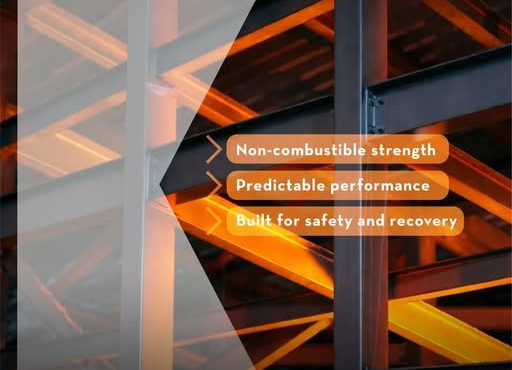


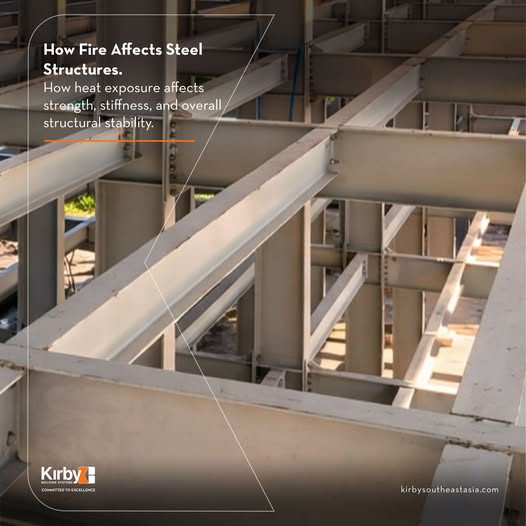
Steel does not burn – but high temperatures significantly influence its structural behavior.
As the temperature increases, steel gradually loses both strength and stiffness. By approximately 600°C, structural steel retains only about 50% of its yield strength, a benchmark referenced in major design standards such as Eurocode and AISC.
Importantly, steel does not need to reach its melting point to compromise a structure. Well below that temperature, the material softens enough to increase deflection and potentially cause instability under load.
The fire performance of a steel structure depends on several critical factors:
- Fire intensity
- Duration of exposure
- Load level during the event
- Structural configuration
- Applied fire protection systems
To meet required fire-resistance ratings, modern buildings incorporate solutions such as intumescent coatings, sprayed fire-resistive materials (SFRM), and fire-rated encasement systems.
Understanding how steel behaves in fire conditions allows engineers to design safer, more resilient industrial and commercial buildings.