Engineering Stronger Buildings Across Southeast Asia at MBAM OneBuild 2026 Kirby Southeast Asia was pleased to participate in MBAM OneBuild 2026, connecting with industry professionals and construction stakeholders in Malaysia and across the region. The event provided an opportunity to exchange ideas, strengthen industry connections, and share Kirby’s experience in delivering reliable steel building solutions for industrial and commercial projects. 5 Key Highlights from MBAM OneBuild 2026 1. Connecting with Malaysia’s Construction Industry MBAM OneBuild 2026 brought together professionals from across the construction and building
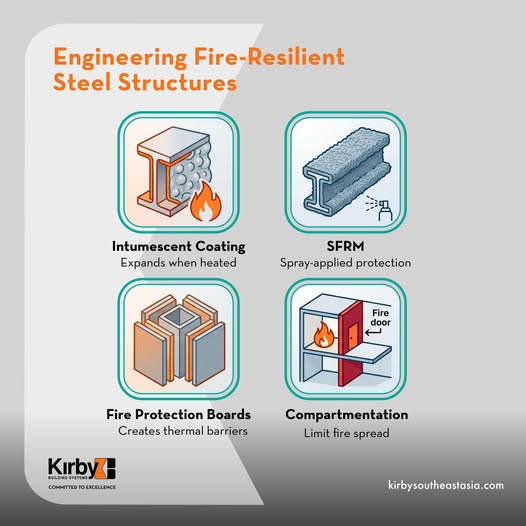
Steel structures are highly dependable, but maintaining their structural integrity during a fire requires the right protection measures. The goal is straightforward: slow down heat transfer and preserve the building’s load-bearing capacity long enough for safe evacuation and emergency response. Common fire protection solutions include: 𝐈𝐧𝐭𝐮𝐦𝐞𝐬𝐜𝐞𝐧𝐭 𝐂𝐨𝐚𝐭𝐢𝐧𝐠𝐬 – Expand when exposed to extreme heat to form a thick, insulating layer around the steel. 𝐒𝐩𝐫𝐚𝐲-𝐀𝐩𝐩𝐥𝐢𝐞𝐝 𝐅𝐢𝐫𝐞-𝐑𝐞𝐬𝐢𝐬𝐭𝐢𝐯𝐞 𝐌𝐚𝐭𝐞𝐫𝐢𝐚𝐥𝐬 (𝐒𝐅𝐑𝐌) – A highly practical, cost-effective solution for industrial and commercial projects. 𝐅𝐢𝐫𝐞 𝐏𝐫𝐨𝐭𝐞𝐜𝐭𝐢𝐨𝐧 𝐁𝐨𝐚𝐫𝐝𝐬 – Clean, rigid boards
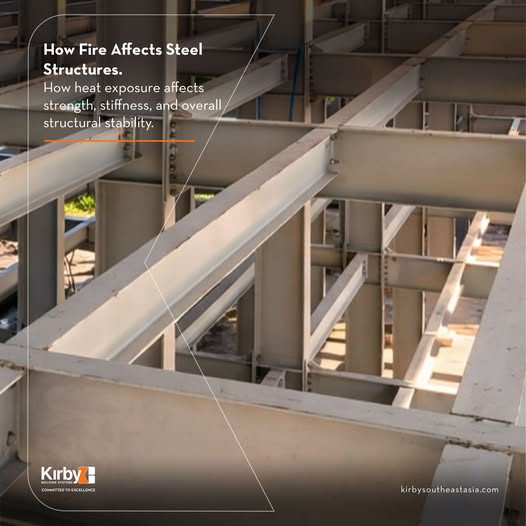
Steel does not burn – but high temperatures significantly influence its structural behavior. As the temperature increases, steel gradually loses both strength and stiffness. By approximately 600°C, structural steel retains only about 50% of its yield strength, a benchmark referenced in major design standards such as Eurocode and AISC. Importantly, steel does not need to reach its melting point to compromise a structure. Well below that temperature, the material softens
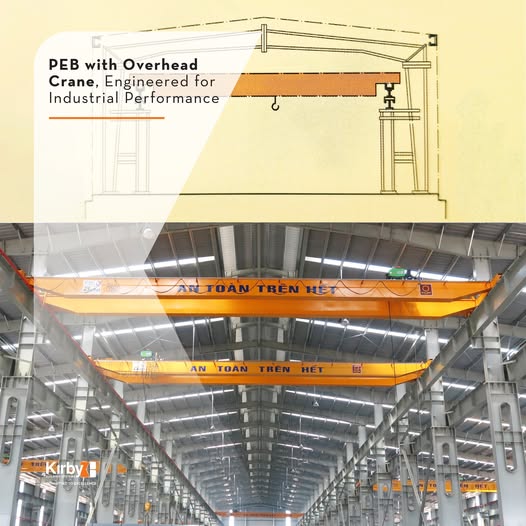
Rigid frame Pre-Engineered Buildings (PEB) can be designed to support 𝐄𝐎𝐓 𝐜𝐫𝐚𝐧𝐞 𝐬𝐲𝐬𝐭𝐞𝐦𝐬 𝐮𝐩 𝐭𝐨 𝟏𝟓 𝐌𝐓 (span up to 21 m), in compliance with 𝐀𝐈𝐒𝐂 𝐚𝐧𝐝 𝐌𝐁𝐌𝐀 𝐬𝐭𝐚𝐧𝐝𝐚𝐫𝐝𝐬. For crane-supported buildings, structural performance goes beyond static loads – dynamic effects must be carefully evaluated. Typical design considerations include: Bracket-mounted crane runway systems Independent support columns for higher crane capacities Impact allowance of 10–25% of the maximum wheel load 20% lateral force from trolley movement Verification of critical load combinations Crane buildings are dynamic systems. Precise load calculation