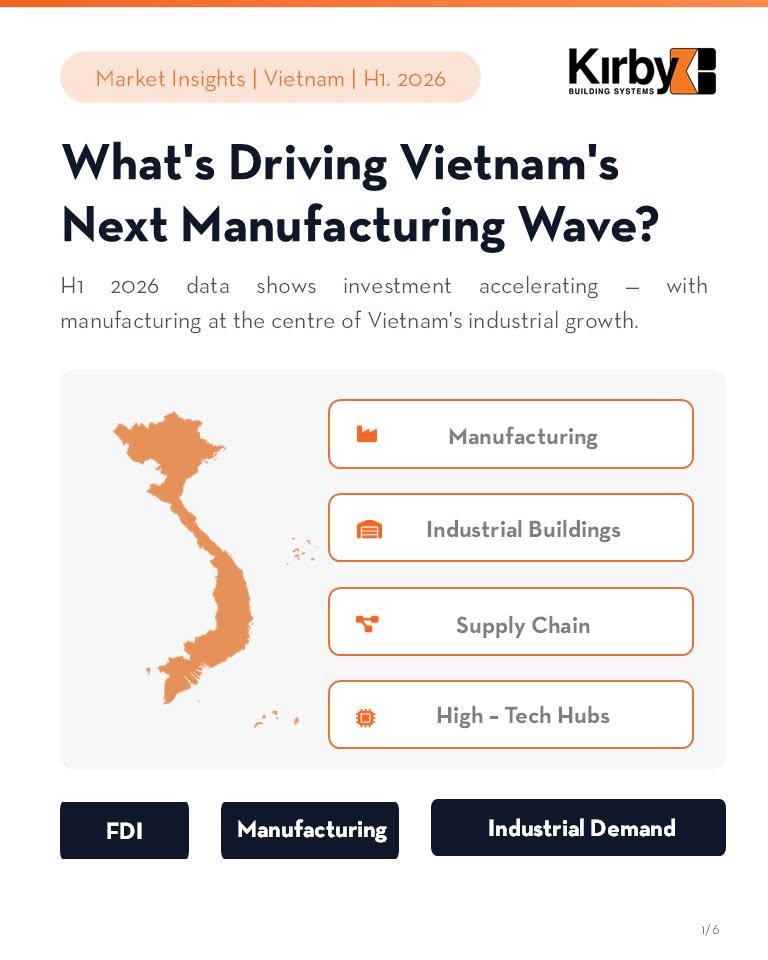
Vietnam’s Next Manufacturing Wave: Why Vietnam Is Becoming a Manufacturing Hub Manufacturing in Vietnam is entering a new phase of growth. As global companies continue to diversify their supply chains and expand their production capabilities, Vietnam is becoming an increasingly important destination for manufacturing investment. The country’s strong FDI performance, growing industrial sector, and expanding manufacturing capabilities are creating new opportunities for businesses looking to establish or expand production facilities. For industrial developers and manufacturers, this growth also creates an increasing need for
Vietnam’s Next Manufacturing Wave Is Already Taking Shape Vietnam’s manufacturing is entering a new phase of growth. As global companies continue to diversify their supply chains and expand their presence across Southeast Asia, Vietnam is becoming an increasingly important destination for manufacturing investment. The numbers tell an interesting story. In the first half of 2026, Vietnam recorded US$34.65 billion in registered foreign direct investment (FDI), while manufacturing and processing continued to account for the largest share of newly registered investment capital. Beyond the
MBAM OneBuild 2026! When: 𝟓–𝟕 𝐀𝐮𝐠𝐮𝐬𝐭 𝟐𝟎𝟐𝟔 Where: 𝐊𝐮𝐚𝐥𝐚 𝐋𝐮𝐦𝐩𝐮𝐫 𝐂𝐨𝐧𝐯𝐞𝐧𝐭𝐢𝐨𝐧 𝐂𝐞𝐧𝐭𝐫𝐞, 𝐌𝐚𝐥𝐚𝐲𝐬𝐢𝐚, Hall 1-2 We are at: 𝐁𝐨𝐨𝐭𝐡 𝟏𝐀𝟕𝟑 We’ve had valuable conversations about Pre-Engineered Building (PEB) and Structural Steel Solutions for warehouses, manufacturing plants, logistics hubs, commercial buildings, and other industrial facilities. It’s encouraging to see the industry’s continued focus on delivering projects faster, smarter, and with greater certainty. If you’re planning your next industrial facility, warehouse, manufacturing
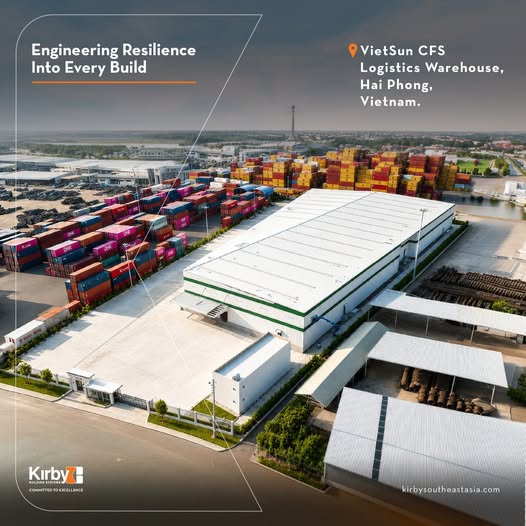
As global industries continue facing logistics disruption, tariff pressures, and manufacturing shifts across Southeast Asia, industrial buildings are being designed with a new priority: resilience. Modern pre-engineered steel buildings (PEB) are no longer just structures for operations; they help businesses adapt faster, scale efficiently, and reduce downtime risks. Key engineering considerations include: • Faster construction timelines • Flexible future expansion • Optimized clear-span layouts • Efficient logistics flow • Scalable operational space From logistics hubs to advanced manufacturing facilities, resilient infrastructure has become an important part of modern