

5 Factors That Determine Steel Building Lifespan
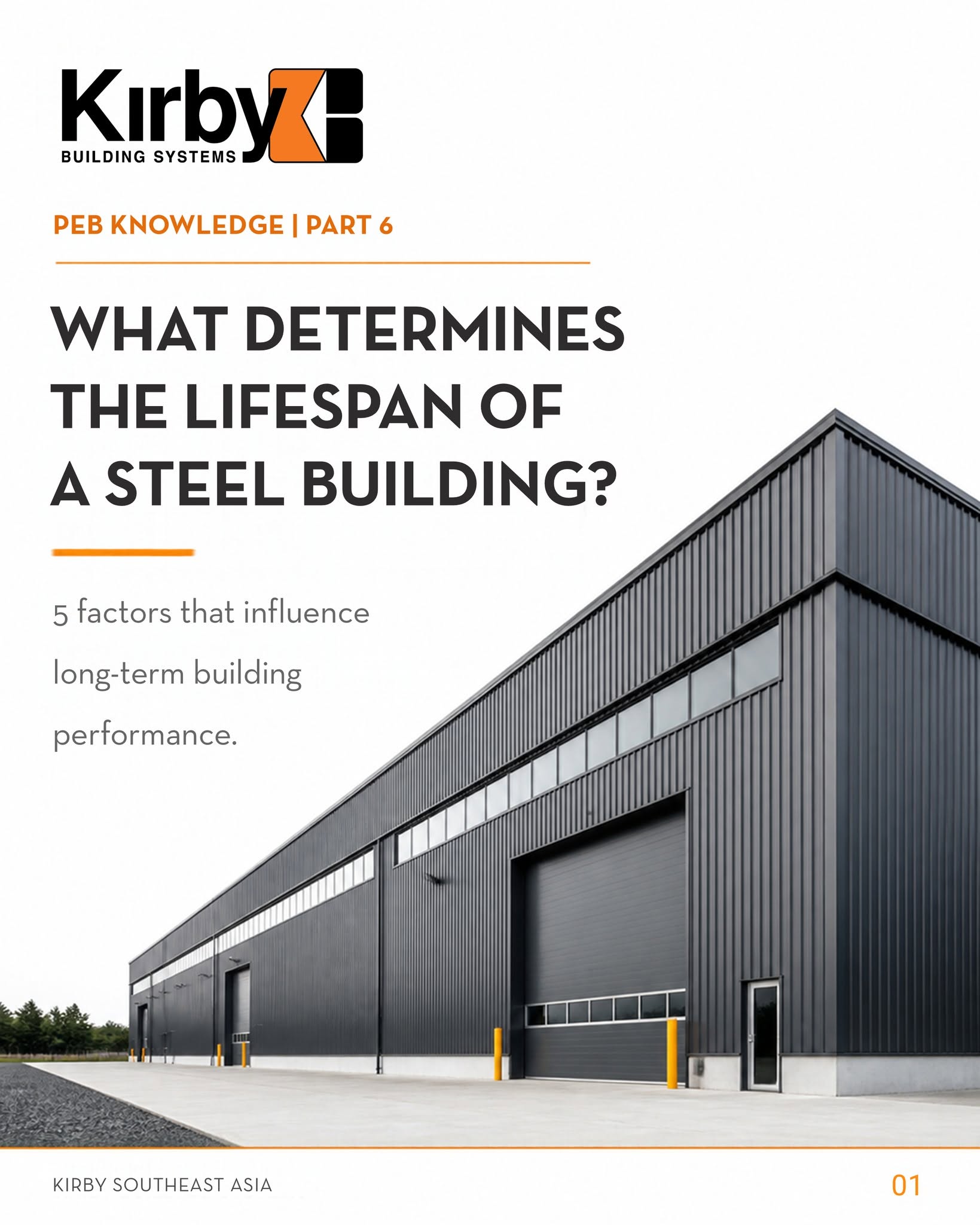
Steel building lifespan depends on more than the quality of the steel itself. A properly designed and constructed steel building can serve for decades, but its durability depends on several important factors.
So, what determines how long a steel building lasts?
Structural design, corrosion protection, construction quality, environmental conditions, and regular maintenance all influence the service life of a steel structure.
Understanding these factors helps building owners, developers, and project managers make better decisions when planning a pre-engineered building (PEB) project.
Here are five key factors that affect steel building lifespan.
Table of Contents
1. Structural Design and Engineering Quality
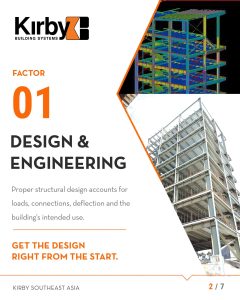
Structural design is one of the most important factors affecting steel building lifespan.
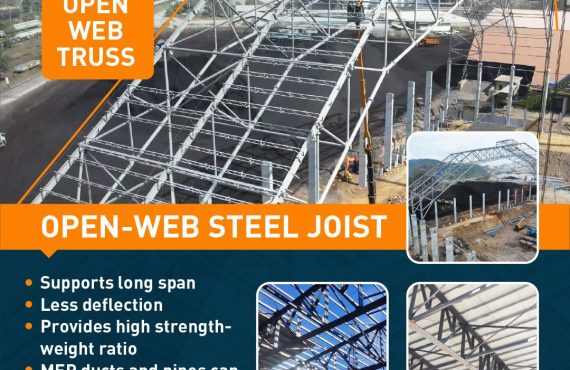
A steel structure must be engineered to withstand the loads and conditions expected throughout its service life, including dead loads, live loads, wind loads, and other project-specific requirements.
A reliable engineering approach should consider:
- Building dimensions and structural configuration
- Appropriate steel grades and material specifications
- Structural connections and detailing
- Wind loads and applicable design standards
- Local building codes and project requirements
Proper engineering helps ensure that the structure meets its intended performance requirements and supports long-term durability.
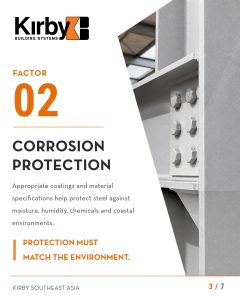
2. Corrosion Protection and Steel Coatings
Corrosion can gradually weaken steel components, especially when buildings are exposed to moisture, chemicals, or aggressive environmental conditions.
Appropriate corrosion protection helps reduce these risks and extend steel building lifespan.
Common protection methods include:
- Protective paint and coating systems
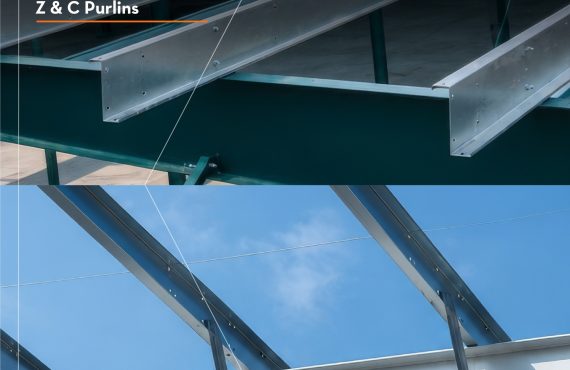
- Hot-dip galvanizing
- Proper surface preparation before coating
- Regular coating inspections and timely repairs
The right protection system depends on the building location and environmental exposure. Industrial facilities and coastal buildings may require additional corrosion protection.
For more information about steel construction standards, visit the American Institute of Steel Construction (AISC).
3. Fabrication and Construction Quality
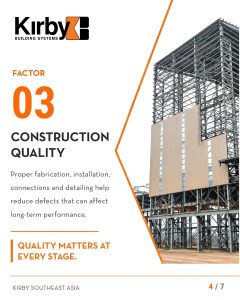
Even a well-designed steel building can develop problems if fabrication and construction are not properly controlled.
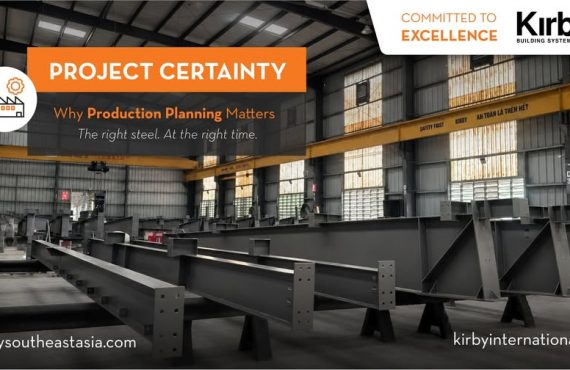
Accurate fabrication ensures that structural components meet approved drawings and dimensional requirements. During construction, correct installation and connection procedures are equally important.
Key quality considerations include:
- Material inspection and traceability
- Welding quality and inspection
- Dimensional accuracy during fabrication
- Proper bolt installation and connections
- Structural alignment during steel erection
Quality assurance and quality control (QA/QC) help identify potential issues before they affect the completed structure.
Choosing an experienced PEB contractor with reliable fabrication and erection capabilities can help reduce construction risks.
4. Environmental and Weather Conditions
Environmental conditions can significantly influence steel building lifespan.
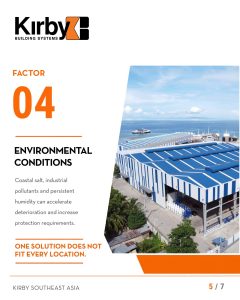
Buildings in coastal areas, humid regions, and industrial zones may face higher corrosion risks due to moisture, salt, pollutants, or chemical exposure.
Important conditions to consider include:
- High humidity and frequent rainfall
- Salt exposure in coastal locations
- Industrial pollutants and chemicals
- Extreme temperatures
- Strong winds and severe weather
Considering these conditions during the engineering stage helps project teams select suitable materials, coatings, and protection systems.
This is particularly important for industrial and commercial buildings across Southeast Asia, where environmental exposure varies by location.
5. Regular Inspection and Maintenance
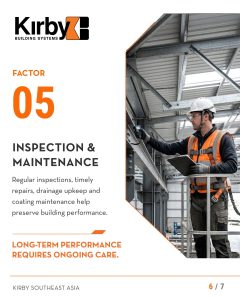
Regular inspection and maintenance are essential for preserving steel building lifespan.
Even a properly designed and constructed building needs periodic checks to identify potential problems before they become serious.
Building owners should monitor:
- Signs of corrosion on exposed steel surfaces
- Damaged or deteriorating protective coatings
- Loose or damaged structural connections
- Water leakage and drainage issues
- Visible structural deformation or unusual movement
Inspection frequency should depend on the building’s environment, usage, and condition.
Addressing minor issues early can prevent costly repairs and help maintain long-term structural performance.
How to Improve Steel Building Lifespan
Extending the service life of a steel building requires attention throughout the entire project lifecycle.
It starts with proper engineering and material selection, followed by quality fabrication, corrosion protection, and professional steel erection. After construction, regular inspection and maintenance help preserve the building’s condition.
At Kirby Southeast Asia, we believe long-term project performance starts with the right engineering approach.
Through integrated engineering, manufacturing, and project execution capabilities, we support industrial and commercial steel building projects across Southeast Asia.
Whether you are planning a new pre-engineered building or evaluating an existing structure, choosing the right technical partner is essential.
Planning your next steel building project?
Contact Kirby to discuss your project requirements and explore suitable steel building solutions.
Surel: sales@kirby.vn
Frequently Asked Questions About Steel Building Lifespan
How long can a steel building last?
A properly designed, constructed, protected, and maintained steel building can serve for several decades. Its actual service life depends on design quality, environmental exposure, materials, and maintenance.
What causes steel buildings to deteriorate?
Common causes include corrosion, inadequate protective coatings, poor construction workmanship, harsh environmental conditions, and insufficient maintenance.
Does galvanizing help extend steel building lifespan?
Yes. Hot-dip galvanizing provides a protective zinc coating that helps reduce corrosion. Its suitability depends on the steel component and environmental conditions.
How can building owners maintain steel structures?
Building owners should arrange periodic inspections, monitor corrosion, maintain protective coatings, check structural connections, and address water leakage promptly.