
BuildingSafety - Kirby South East Asia

BuildingSafety

/แท็ก:BuildingSafety

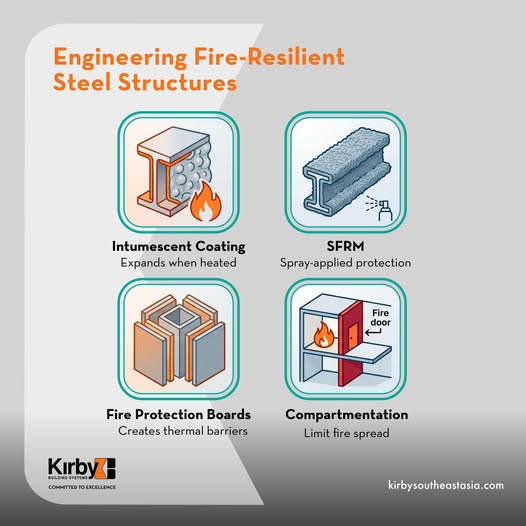
STEEL & FIRE 3 – Steel Fire Protection: 4 Methods for Structural Safety

Steel Fire Protection: 4 Methods for Structural Safety Steel structures are widely used in industrial, commercial, and large-scale buildings because of their strength, flexibility, and dependable structural performance. However, when exposed to extreme heat, structural steel can lose strength and stiffness. This is why steel fire protection is an important consideration when designing and constructing buildings where specific fire-resistance requirements apply. The objective of structural fire protection is straightforward: slow the transfer of heat to structural steel and help maintain its load-bearing capacity
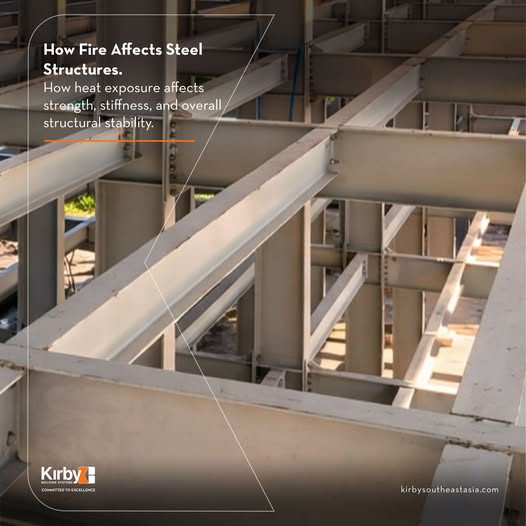
𝐒𝐭𝐞𝐞𝐥 & 𝐅𝐢𝐫𝐞 – 𝐏𝐚𝐫𝐭 𝟐: 𝐇𝐨𝐰 𝐅𝐢𝐫𝐞 𝐀𝐟𝐟𝐞𝐜𝐭𝐬 𝐒𝐭𝐞𝐞𝐥 𝐒𝐭𝐫𝐮𝐜𝐭𝐮𝐫𝐞𝐬

Steel does not burn – but high temperatures significantly influence its structural behavior. As the temperature increases, steel gradually loses both strength and stiffness. By approximately 600°C, structural steel retains only about 50% of its yield strength, a benchmark referenced in major design standards such as Eurocode and AISC. Importantly, steel does not need to reach its melting point to compromise a structure. Well below that temperature, the material softens