SteelEngineering

/Menandai:SteelEngineering

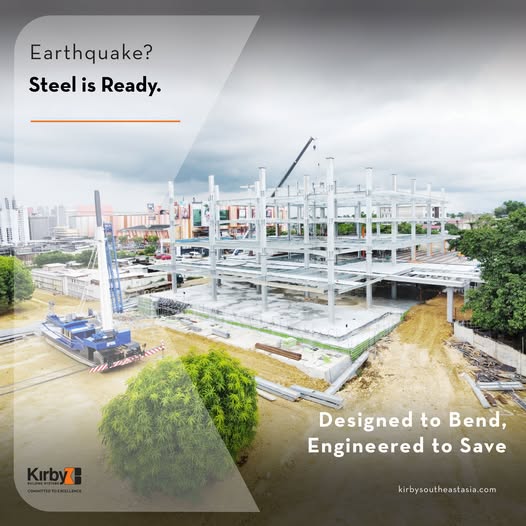
Steel to the Sky – Post 3 Earthquake? Steel is Ready.

Steel to the Sky – Part 3 Earthquake? Steel is Ready. When the ground shakes, brittle materials shatter without warning. Steel doesn’t fight the quake; it dances with it. Thanks to its natural ductility, the frame can bend, stretch, and soak up massive seismic energy – turning what would be destructive forces into controlled, survivable movement. Instead of sudden collapse, you get predictable deformation and those precious extra seconds to get people out. That’s why properly engineered steel structures: – Absorb and redistribute seismic loads –
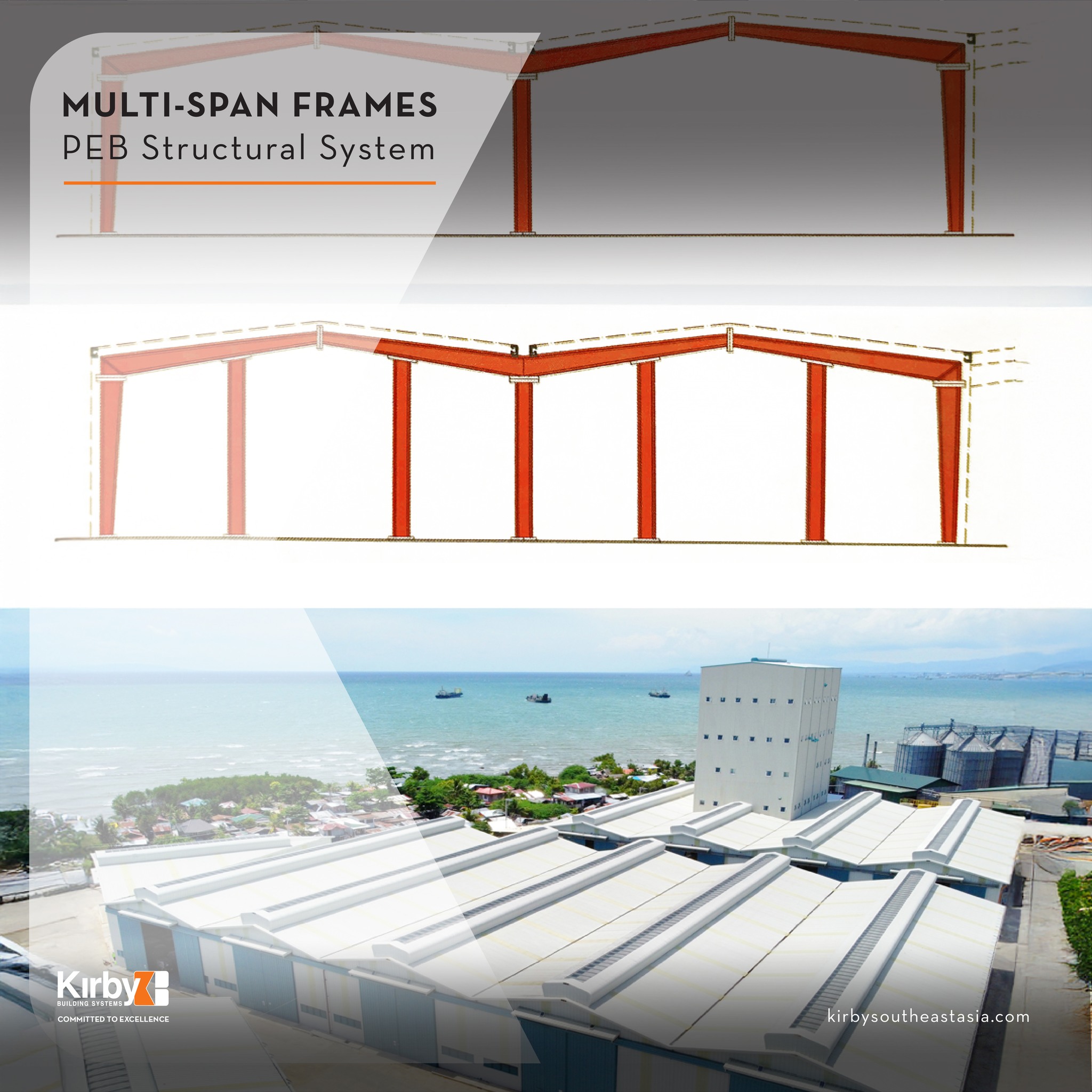
𝐏𝐄𝐁 𝐊𝐧𝐨𝐰𝐥𝐞𝐝𝐠𝐞 – 𝐏𝐚𝐫𝐭 𝟐: 𝐌𝐮𝐥𝐭𝐢-𝐒𝐩𝐚𝐧 𝐅𝐫𝐚𝐦𝐞𝐬

Multi-span frames are commonly used in 𝐥𝐚𝐫𝐠𝐞 𝐢𝐧𝐝𝐮𝐬𝐭𝐫𝐢𝐚𝐥 𝐚𝐧𝐝 𝐥𝐨𝐠𝐢𝐬𝐭𝐢𝐜𝐬 𝐛𝐮𝐢𝐥𝐝𝐢𝐧𝐠𝐬 where wide, uninterrupted space is required. In PEB design, 𝐮𝐩 𝐭𝐨 𝟔 𝐬𝐩𝐚𝐧𝐬 𝐨𝐫 𝟏𝟐𝟎 𝐦𝐞𝐭𝐞𝐫𝐬 can be analyzed 𝐰𝐢𝐭𝐡𝐨𝐮𝐭 𝐥𝐚𝐭𝐞𝐫𝐚𝐥 𝐞𝐱𝐩𝐚𝐧𝐬𝐢𝐨𝐧 𝐣𝐨𝐢𝐧𝐭𝐬, allowing efficient structural behavior and flexible layouts. For wider buildings, 𝐝𝐨𝐮𝐛𝐥𝐞-𝐜𝐨𝐥𝐮𝐦𝐧 𝐞𝐱𝐩𝐚𝐧𝐬𝐢𝐨𝐧 𝐣𝐨𝐢𝐧𝐭𝐬 are introduced to manage structural and thermal movement. Exterior columns are designed as 𝐛𝐮𝐢𝐥𝐭-𝐮𝐩 𝐬𝐞𝐜𝐭𝐢𝐨𝐧𝐬, tapered or straight, with 𝐩𝐢𝐧𝐧𝐞𝐝 𝐨𝐫 𝐟𝐢𝐱𝐞𝐝 𝐛𝐚𝐬𝐞𝐬 depending on eave height. These columns form rigid connections with continuous built-up

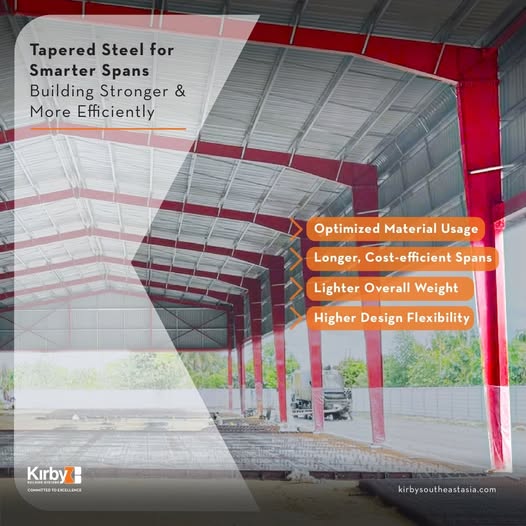
PEB Knowledge – Part 1: Tapered Steel for Smarter Spans Building Stronger & More Efficiently

At Kirby Southeast Asia, one of the key advantages of Pre-Engineered Buildings lies in the use of built-up tapered steel sections – a smarter, more efficient alternative to conventional hot-rolled sections. In PEB design, built-up members are formed by welding steel plates into an I-section whose depth can be varied along the span. This allows engineers to place material exactly where strength is needed, resulting in a lighter yet stronger structure. Why Built-Up Sections Matter  Optimized material usage – thicker where the bending

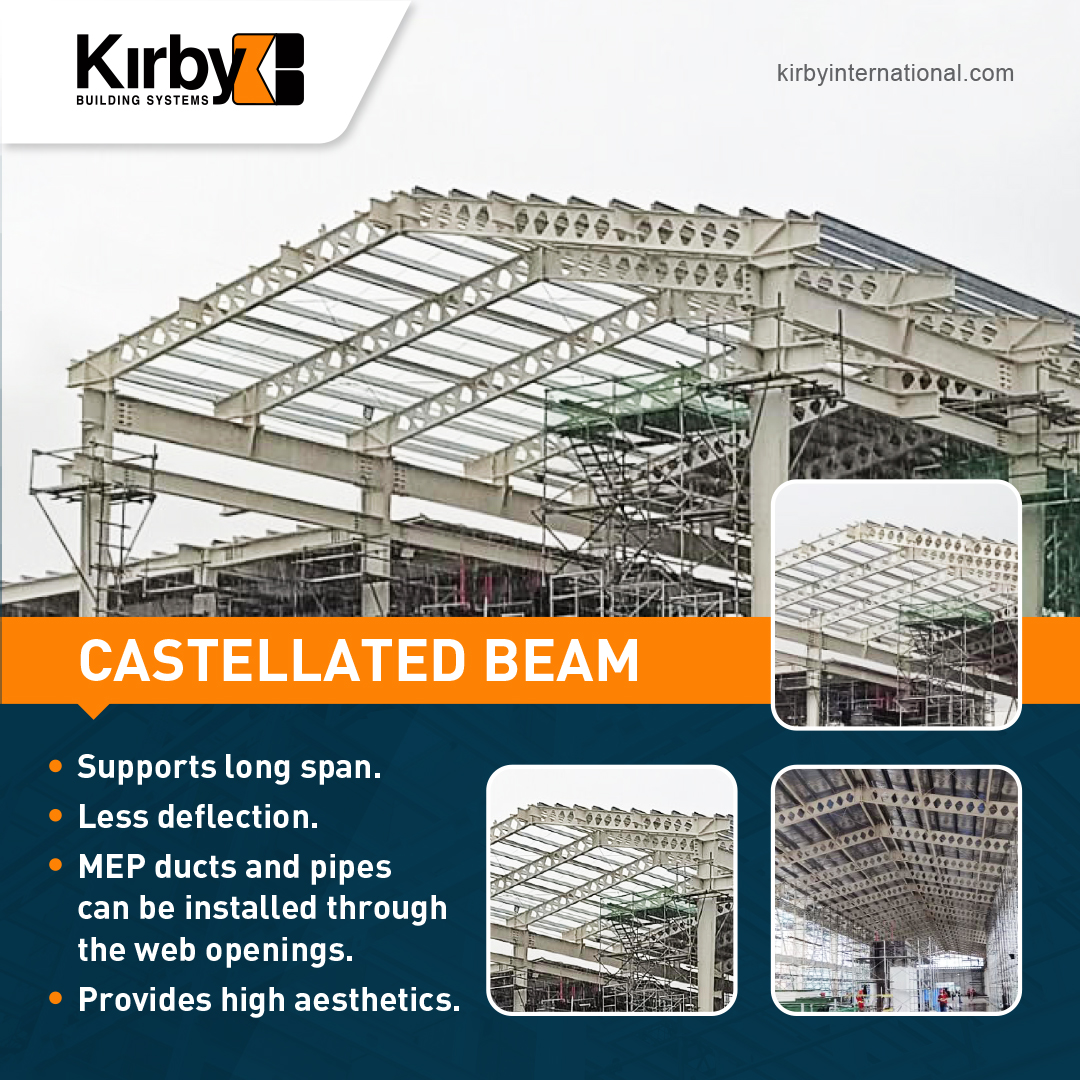
Castellated beams

At Kirby Southeast Asia, we specialize in designing and supplying steel pre-engineered buildings and structures, employing cutting-edge solutions like castellated beams. A castellated beam contains a regular and recurring pattern of hexagonal holes. The pattern is cut lengthwise across two halves, offset, and then welded together to form a single extended beam. This innovative design enhances the beam’s strength-to-weight ratio and offers a myriad of advantages: ✔ Supports long span. ✔ Less deflection. ✔ MEP ducts and pipes can be installed through the web