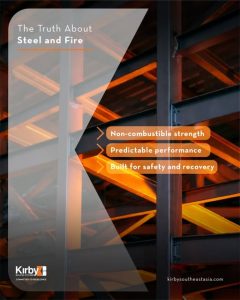


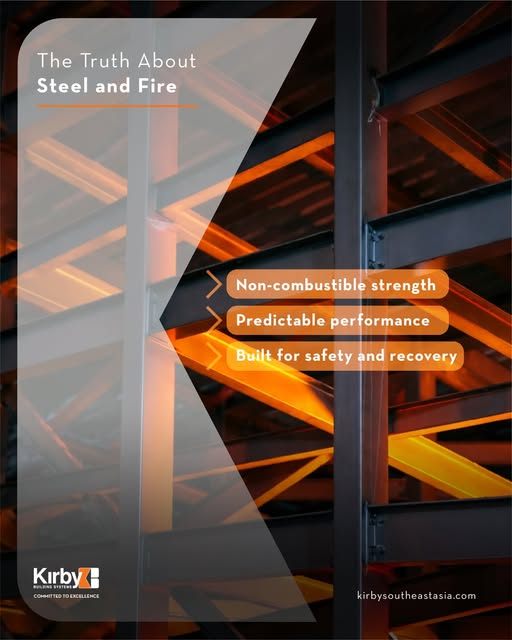
Steel is non-combustible and does not act as a fuel in a fire. That said, like all structural materials, steel’s load-carrying capacity changes when exposed to elevated temperatures. Engineers manage this through design: selecting appropriate sections, limiting loads, and applying passive fire protection so the structure remains stable for the required evacuation and firefighting periods.
What makes steel a preferred structural material in fire engineering is its predictable behaviour. Because its response to temperature can be modelled and tested, designers can specify protection systems (insulation, intumescent coatings, fire barriers) that ensure performance targets are met. With such measures in place, steel buildings can offer reliable life-safety performance, lower post-fire repair costs, and the potential for partial reuse after an incident.
At Kirby, we design structures to meet recognised fire performance criteria and integrate certified fire-protection solutions according to the project’s risk profile and local regulations.
What makes steel a preferred structural material in fire engineering is its predictable behaviour. Because its response to temperature can be modelled and tested, designers can specify protection systems (insulation, intumescent coatings, fire barriers) that ensure performance targets are met. With such measures in place, steel buildings can offer reliable life-safety performance, lower post-fire repair costs, and the potential for partial reuse after an incident.
At Kirby, we design structures to meet recognised fire performance criteria and integrate certified fire-protection solutions according to the project’s risk profile and local regulations.